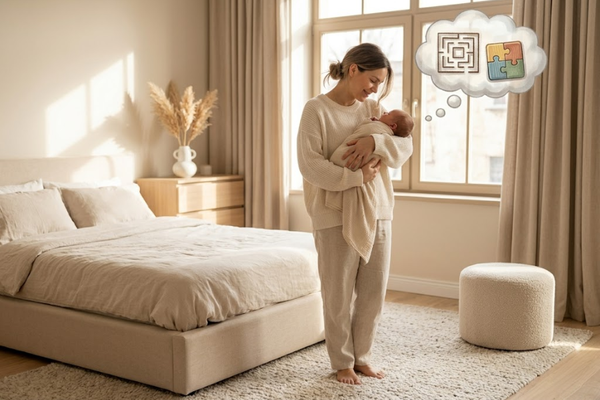
Why Every Tired New Mom Needs These Words Today
Some days, the cuteness gets you. The baby smell. The tiny socks. The way they curl their fingers around yours like you're their whole world. Other days? You're crying into cold chai at 4 PM, hair in yesterday's bun, wondering if anyone sees you.
If you're a tired new mom scrolling through this at 2 AM with a baby on your chest, this one's for you. No judgement. No "you should." Just twelve honest truths you deserve to hear—rooted in real postpartum support and gentle advice for new moms in India. Bookmark this. Come back to it. Cry if you need to. You're not alone.
The 12 Things You Deserve to Hear Today
1. You're Not Failing—You're Just Human
That little voice whispering "I'm not doing enough" is the loudest liar in your head right now. Sleep deprivation, hormonal shifts, and the fourth trimester chaos are real. You're not failing motherhood. You're surviving it. Beautifully.
2. Crying Doesn't Make You a Bad Mom
It makes you a tired mom with a working heart. Your tears are not weakness—they're release. Even your baby cries to feel better. So can you.
3. Asking for Help Is Strength, Not Weakness
Indian moms are conditioned to do it all—and silently. Stop. Let your mum cook the dal. Let your partner do the night feed. Let your sister-in-law hold the baby while you shower. Village support isn't a luxury; it's how motherhood was always meant to work.
4. Your Body Did Something Absolutely Magnificent
Those stretch marks? Medals. That softer belly? It grew a human. The postpartum body isn't something to "bounce back" from. It's something to thank. Wear the loose kurta. Skip the mirror today. Your body just rewrote biology.
5. The "Supermom" Doesn't Exist
She's a marketing myth. Every Instagram mama with perfect curls and a spotless kitchen has a meltdown you didn't see. The supermom myth is exhausting because it's impossible. Be a real mom. A messy mama. That's the brave kind.
6. Sleep When You Can—Guilt-Free
Forget the laundry. Skip the dishes. The pile will wait. Your nervous system won't. Even a 20-minute nap can shift your whole day. Rest is not lazy—it's recovery.
7. It's Okay to Not Love Every Minute
You can love your baby fiercely and miss your old life. You can be grateful and exhausted. Both are true. Loving your baby doesn't mean loving the colic, the spit-up, or the 6th wake-up at 3 AM. That's not mom guilt—that's honesty.
8. You Are the Expert on Your Baby
Your aunt's advice. Your neighbour's tips. The WhatsApp uncle who has opinions. They mean well, but you spend more time with your baby than anyone alive. Trust your instincts. They were forged the moment you became a mother.
9. Postpartum Feelings Are Real—And Treatable
Postpartum depression in India affects an estimated 1 in 5 new mothers, and many more suffer in silence. If your sadness, anxiety, or numbness lasts more than two weeks, please talk to your doctor. Wanting help with your new mom mental health doesn't make you weak. It makes you wise.
When to Reach Out for Help
- Persistent crying or hopelessness
- Difficulty bonding with baby
- Intrusive scary thoughts
- Constant exhaustion beyond normal new-mom tired
Call your gynaecologist, paediatrician, or a mental health helpline. You deserve support.
10. Your Worth Isn't Measured in Snacks Cooked
You're not a service. Not a caretaker robot. Not a 24/7 milk machine. You are a person who happens to be raising a tiny one. Your needs—food, water, joy, dignity—still matter.
11. This Phase Will Pass—Sooner Than You Think
Right now, the days feel like decades. But ask any mom of older kids and she'll tell you—the years fly. The colicky nights end. The cluster feeds end. The crying ends. So will this. Breathe.
12. You Are Already Enough
Not when you lose the weight. Not when the house is clean. Not when the baby sleeps through the night. Right now. In yesterday's t-shirt with milk stains and unbrushed hair, you are already the mother your baby needs.
A Gentle Note for Indian New Moms
The Indian tradition of jaapa—40 days of confinement, rest, and care for the new mother—exists for a reason. Our grandmothers knew what modern life forgot: postpartum recovery takes time, food, warmth, and community. If you have a maa, a saas, a sister, or a friend offering help—take it. If you don't, build your circle: online groups, lactation consultants, postpartum doulas, therapists. The "supermom alone in a flat" model isn't strength. It's burnout.
From Ohmybebe to Every Mama Reading This

At Ohmybebe, we don't believe in the impossible perfection sold on social media. We believe in real motherhood—the soft, sleepless, soul-deep kind. The chai-stained, lullaby-humming, tear-streaked, fiercely loving kind. To every tired new mom reading this: you are seen. You are enough. You are doing more than beautifully. One slow breath, one warm cuddle, one quiet feed at a time.
Frequently Asked Questions (FAQs)
1. What is the fourth trimester and why does it matter?
The fourth trimester is the first 12 weeks after birth—a critical phase where mother and baby physically and emotionally adjust. Rest, gentle nutrition, and emotional support are essential during this time.
2. How can I deal with mom guilt as a new mom?
Recognise that mom guilt is almost universal. Talk about it openly, lower impossible expectations, lean on your support system, and remind yourself: you can love your baby deeply and still need rest.
3. What's the difference between baby blues and postpartum depression?
Baby blues are short-lived mood swings in the first 2 weeks. Postpartum depression in India and globally lasts longer, feels deeper, and needs medical support—please don't ignore it.
4. What are the best things to say to a tired new mom?
"You're doing great." "What can I bring you?" "Go rest, I've got the baby." "You're not alone." Avoid unsolicited advice or comments about her body.
5. How long does postpartum recovery actually take?
While most women feel physically better in 6–8 weeks, full hormonal, emotional, and pelvic recovery can take 12 months or more. Be patient with yourself.
Shop at OhMyBebe: Make the early days a little easier with our Newborn Clothes, Bath & Sleep Essentials and Baby Gift Bundles – soft organic cotton chosen with tired parents in mind.